Chimney Crown, Flashing & Masonry Repair in San Antonio

San Antonio Chimney Sweeps connects San Antonio-area homeowners with independent local chimney sweep, inspection and repair companies for free, no-obligation quotes. From a cracked crown or a leak around the flashing to spalling brick, tuckpointing, waterproofing and a full reline, local masonry and chimney companies send their prices for the work your chimney actually needs.

Get a Free Quote
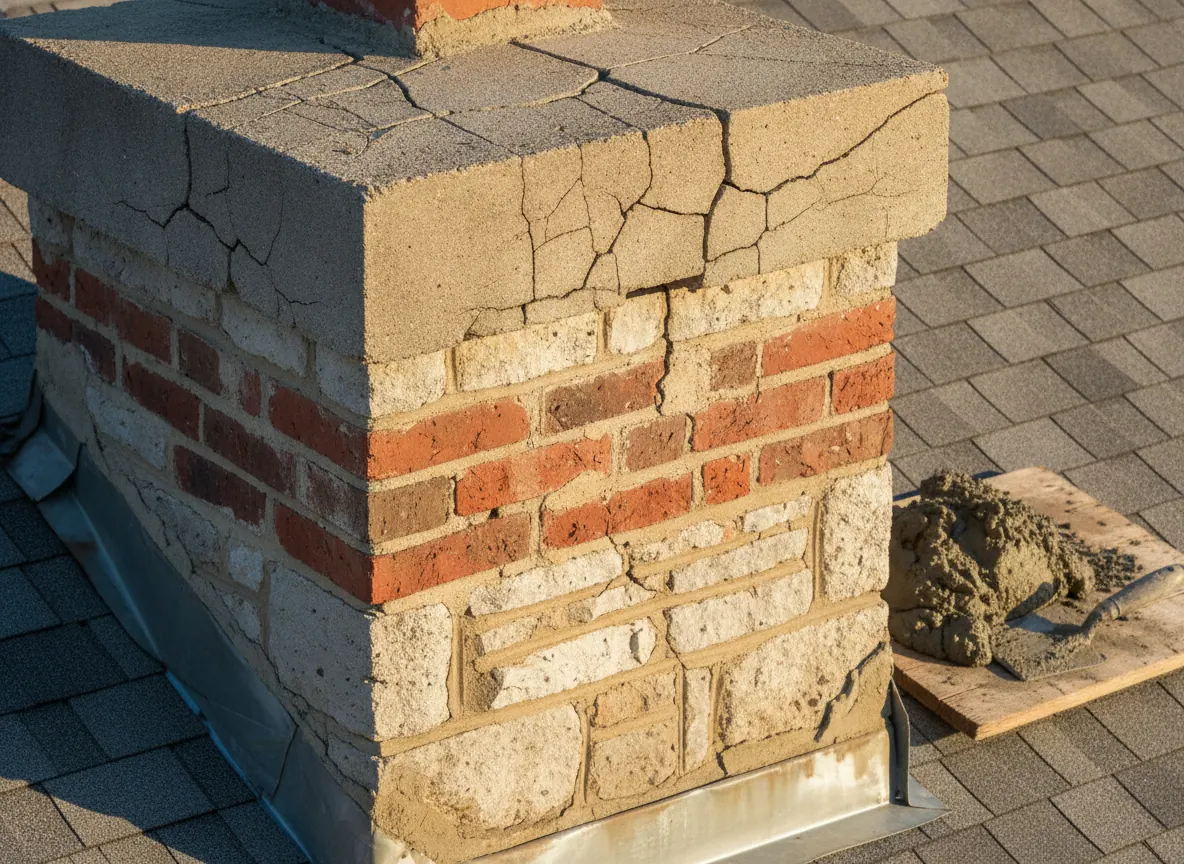
Chimney top with a cracked crown and fresh mortar repair

Water, then the occasional hard freeze

San Antonio chimneys are not worn down by months of burning. They are worn down by 32.38 inches of rain a year, most of it in spring and fall with May the wettest month at 4.40 inches, followed by a short cold stretch of about 14.0 nights at or below 32 °F. Water that soaked into a porous crown, an open mortar joint or an unsealed brick face expands when it freezes. Most winters that is a slow process. The exceptions are the dated freezes local companies now use as reference points: 9 °F on February 15, 2021, with the airport below freezing for 4 days 12 hours during Winter Storm Uri; 18 °F on January 17, 2024; light snow and 24 °F on January 21–22, 2025; and a 20 °F minimum in winter 2026. Cracked crowns, spalled brick faces and flashing leaks that show up the following spring often trace back to one of those weeks.

The oldest masonry stock sits inside Loop 410: Alamo Heights has a median year built of 1950, Terrell Hills 1957 and the Monte Vista ZIP code 1949, and 24.1% of Bexar County housing predates 1970 (ACS 2024 5-year). Those brick and limestone chimneys with clay-tile flues are where crown, tuckpointing and relining quotes concentrate. After the freeze: what to look for covers the warning signs.

Repairs local companies quote

Crown repair and rebuild

The crown is the sloped concrete or mortar cap that sheds water off the top of a masonry chimney. Hairline cracks are sealed with a brushable or trowelable crown coating; a crumbling crown is broken out and poured new, ideally with an overhang and drip edge. Typical national estimates: repair $750–$1,000, replacement $1,000–$3,000.

Flashing repair and replacement

Flashing is the metal that seals the joint between chimney and roof. On stucco and stone-veneer chimneys the counterflashing is often buried in the finish, which makes leaks harder to trace. A sealant repair runs about $200–$300 and new step and counterflashing $300–$800; a cricket behind a wide chimney diverts water.

Tuckpointing and spalling brick

Tuckpointing (repointing) grinds out failed mortar joints and packs in new mortar matched to the old. Spalled bricks, where the face has popped off after water froze inside, are cut out and replaced. Chimney tuckpointing typically runs $500–$2,500; a partial rebuild above the roofline $500–$4,000.

Waterproofing

A breathable water-repellent sealer on brick and crown lets trapped moisture out while keeping rain from soaking in. It is usually applied after repointing or crown work, at a typical $150–$500.

Relining

When a camera scan shows cracked or missing flue tiles, the fix is a new liner: a stainless steel flexible or rigid liner, insulated where the appliance calls for it, or a cast-in-place resurfacing of the existing flue. Typical range $1,800–$4,000 (average about $2,500; up to about $7,000 for long or complex flues). A reline is also the usual step before a wood-to-gas insert goes into an old masonry chimney. Liners serving a furnace or water heater are HVAC or plumbing work with their own licensing.

Firebox and smoke chamber

Cracked refractory panels in prefab units are replaced; open joints in a masonry firebox are repointed with refractory mortar; a rough corbelled smoke chamber is parged smooth. These come up in Level 2 inspection reports more than any other item.

All prices above are typical national ranges from Fixr (2025) and Angi via Bob Vila (2023) — estimates, not quotes. Ask that the written quote name the materials and include photos of the defect.

Who does the work, and what paperwork applies

No state license, but a city registration. Texas has no masonry, roofing or general-contractor license; roofing has only a voluntary RCAT program. Inside San Antonio city limits, however, a contractor doing nonstructural repair on an existing home, which covers crowns, flashing, tuckpointing, caps and relining, needs a City of San Antonio Home Improvement Contractor registration. Structural work, meaning elements essential to the building's stability, is reserved to Residential Building Contractors under DSD Code Interpretation CI-2025-005, so a chimney rebuild that carries load or ties into framing falls on that side of the line. Ask which registration the company holds, along with proof of insurance, a written scope with photos, and CSIA Certified Chimney Sweep or NFI certification where the company also sweeps (verify on csia.org or nficertified.org).

Permits. Sweeping, inspections, caps and dampers need no City of San Antonio permit we could find; dryer-duct, mechanical and gas work are permitted trades; whether a chimney rebuild or reline needs a building permit is not stated on the City's pages, so the contractor confirms with Development Services. Outside city limits, permits vary by city; your contractor confirms.

Historic districts. In King William, Monte Vista, Dignowity Hill and the other districts with historic zoning, the Office of Historic Preservation requires a Certificate of Appropriateness for exterior modifications and repairs, and work started without one can draw a stop-work order and a $500 post-work application fee. A visible chimney rebuild, crown change or new cap on an H-zoned house goes through OHP first; minor projects can usually be approved by staff. See Alamo Heights and Terrell Hills for the older-home areas just outside the city's districts.

Insurance. If the damage followed a storm, a freeze or a chimney fire, ask your insurer what your policy covers, and keep the inspection report and photos. A Level 2 camera scan is the document that separates sudden damage from long-term wear. Afterward the chimney returns to its normal sweep and inspection schedule. Budget figures for every line are in the cost guide.

Frequently asked questions

Are chimney repairs covered by homeowners insurance in Texas?

It depends on the policy and the cause. Sudden events such as a storm, lightning, a chimney fire or freeze damage are treated differently from gradual wear, and the distinction is usually made from the inspection report and photos. Ask your insurer what your policy covers before the work starts, and keep every sweep and inspection report. This is general information, not legal advice.

Can chimney masonry be repaired in winter in San Antonio?

Usually, yes. San Antonio averages 14.0 nights at or below 32 °F and 0.2 inches of snow a year, so most winter days are workable for mortar, crown coatings and sealers, which companies schedule around the few freezing nights and rain. The exception is the week after an event like February 2021, when demand spikes and crews prioritize leaks. Fall is the easiest time to book.

Does a chimney rebuild or reline need a permit in San Antonio?

Whether a rebuild or reline needs a building permit is not stated on the City of San Antonio's pages, so the contractor confirms with Development Services before starting. Nonstructural repairs are done under a Home Improvement Contractor registration; structural work needs a Residential Building Contractor. Outside city limits, permits vary by city. Historic districts need an OHP Certificate of Appropriateness for exterior work.

What is chimney relining, and when is it needed?

Relining replaces or resurfaces the flue inside the chimney, usually with a stainless steel liner or a cast-in-place coating, after a camera scan finds cracked, shifted or missing clay tiles. It is also the common step before a gas or wood insert goes into an older masonry chimney. Typical national estimates run $1,800–$4,000, averaging about $2,500, and up to about $7,000 for difficult flues.

Why does my chimney leak only when it rains hard?

Three places let water in: a cracked or porous crown, failed flashing where the chimney meets the roof, and brick or mortar that has lost its face and soaks up rain. May, September and October are San Antonio's wettest months, which is when these show. A company should water-test and photograph the source before quoting a crown, flashing or waterproofing repair.

Before the first cold front, get a clear chimney quote.

Free, no-pressure quotes across San Antonio, Alamo Heights, Boerne, New Braunfels, Schertz and Bexar County.

Call NowFree Quote