Gas Fireplace, Gas Log Set & Insert Service in San Antonio

San Antonio Chimney Sweeps connects San Antonio-area homeowners with independent local chimney sweep, inspection and repair companies for free, no-obligation quotes. If the pilot will not stay lit, the logs soot up, the remote stopped working or you want a log set in a wood-burning firebox, local hearth companies send their prices.

Get a Free Quote
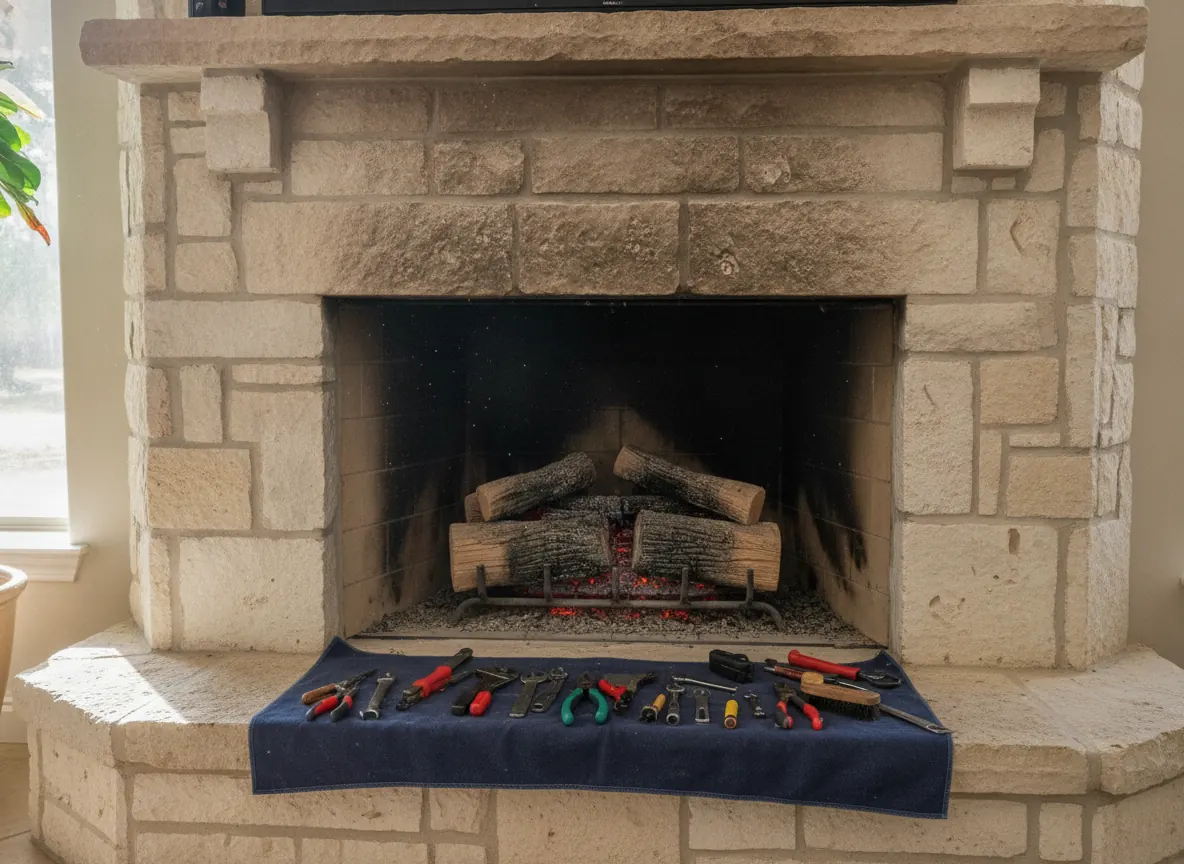
Gas log set with the glass front removed for service in a limestone fireplace

San Antonio is a gas-log town

Fireplaces here are an amenity, not the furnace. In Bexar County 27.9% of occupied homes heat with utility gas, 1.0% with bottled or tank gas and 0.1% with wood (ACS 2024 5-year), and CPS Energy serves about 399,000 natural gas customers across San Antonio and parts of seven adjoining counties. The gas share runs higher in the older and north-side enclaves: Shavano Park 65.7%, Terrell Hills 57.1%, Alamo Heights 47.6% and Helotes 44.5% (same series). Most of those homes have a gas stub in the firebox feeding a vented log set in a masonry fireplace, a direct-vent insert, or a factory-built gas fireplace behind glass. With 72% of the year's heating degree days falling in December through February, these units run a few dozen evenings a winter and then sit for nine months, which is when pilots clog, thermocouples weaken and spiders find the burner ports.

Propane is the exception to watch for: outside CPS Energy's gas lines, Hill Country homes in Kendall and Comal counties are more often on tank gas, and propane appliance work is handled under different rules (below).

What gas fireplace service covers

Annual tune-up

Glass removed and cleaned, logs and ember bed lifted and repositioned, burner ports cleared, pilot assembly, thermocouple or thermopile tested, blower cleaned where fitted, and the unit relit and checked for a stable flame. For vented sets, the flue gets the same annual check as any chimney.

Pilot, thermocouple and valve problems

"Why does my pilot keep going out" is usually a weak thermocouple or thermopile, a dirty pilot orifice, or a failing gas valve. Typical national estimates: a thermocouple $75–$150, a gas valve $150–$300, and gas fireplace repair overall $200–$1,000 (Fixr 2025 and Angi via Bob Vila 2023 — estimates, not quotes).

Ignition and remote troubleshooting

Standing-pilot sets, intermittent pilot ignition (IPI) systems and remote or wall-switch controls each fail differently. Whether a unit lights during a power outage depends on its ignition type and battery backup; ask the company how yours behaves, since that mattered to many households in February 2021.

Log sets: vented and vent-free

Service, replacement of broken or sooted logs, and installation of a new log set into an existing gas-ready firebox. Vent-free sets have their own clearance and sizing rules; ask the company to show the manufacturer's listing for the firebox size.

Inserts and direct-vent units

Gas inserts in old masonry fireplaces and direct-vent fireplaces in newer homes get the burner service above plus a check of the vent run and its exterior termination for blockage and corrosion.

Wood-to-gas conversion

Putting gas logs or an insert into a wood-burning fireplace starts with a Level 2 chimney inspection, since a change of fuel or appliance is one of the standard triggers, and often a liner sized to the new unit. The gas supply is a separate, licensed trade (next section).

Who may touch the gas in Texas

Gas piping is plumbing under Texas law (Occupations Code §1301.002(7)). Gas line work is done only by Texas-licensed plumbers (or, for propane, Railroad Commission-licensed LP-gas companies); inside San Antonio a Plumbing, Gas and Sewer permit applies. That covers any new stub, valve or line to a fireplace, and a plumber working under a responsible master plumber pulls the permit. Ask who will touch the gas. Burner, pilot and log-set service on the appliance itself is a different question: ask whether the company holds a TDLR ACR (TACL) license for that work, and have it explain which parts of the job fall to a plumber, which to its hearth technician and, on propane, which to an RRC-licensed installer.

Texas has no "gas fireplace technician" license, so the credentials to ask for are the same as elsewhere on this site plus the trade licenses above: NFI certification (verify on nficertified.org) or CSIA certification (csia.org), proof of insurance, and a written scope with photos. A carbon monoxide check with a meter at the end of the service is a reasonable thing to ask for on any vented or vent-free gas appliance. If you are selling, note that the TREC Seller's Disclosure Notice (Form 55-1, 2026) asks about "Natural Gas Lines," "Gas Fixtures" and "Fuel Gas Piping" by material, so keep the service invoice. This is general information, not legal advice; our guide to who can work on a gas fireplace in Texas has the detail.

Gas fireplaces still need the chimney looked at

A vented log set in a 1950s Alamo Heights or Terrell Hills firebox sends its combustion gases up the same clay-tile flue the wood fires used, and that flue needs the same annual inspection for nests, debris and cracked tiles. Gas flues are typically swept at $85–$250 nationally, less than a wood flue, because the deposit is light. Direct-vent and factory-built units vent through their own pipe, which is checked at the termination. If the home still burns wood occasionally, see chimney sweeping; if an animal has moved into an idle flue above a gas set, see caps, dampers and animal removal. Service quotes for the gas unit itself are compared in the cost guide, and areas such as Shavano Park and Helotes have their own pages.

Frequently asked questions

Who fixes gas fireplaces in San Antonio?

Hearth and chimney companies service the appliance: pilot, thermocouple, valve, logs, glass, blower and remote. Any work on the gas line itself is plumbing under Texas law and is done only by a Texas-licensed plumber, or an RRC-licensed LP-gas company on propane, with a City Plumbing, Gas and Sewer permit inside San Antonio. Ask who will touch the gas and whether the company holds a TDLR ACR license for appliance work.

Why does my gas fireplace pilot light keep going out?

The usual causes are a weakened thermocouple or thermopile that no longer holds the valve open, a pilot orifice narrowed by dust or spider webs after months idle, a draft across the pilot, or a gas valve on its way out. A service visit tests each in turn. Typical national estimates: thermocouple $75–$150, gas valve $150–$300, repairs overall $200–$1,000 (estimates, not quotes).

Does a gas fireplace need a chimney inspection or sweep?

Yes, annually, like any flue. A vented log set uses the original masonry chimney, which still collects nests, leaf debris and cracked tiles while idle, and a direct-vent unit has a termination that can block or corrode. Gas flues are usually swept at $85–$250 nationally. A Level 2 camera inspection is the standard step before converting a wood fireplace to gas or adding an insert.

Can a wood-burning fireplace be converted to gas logs?

Often, but not by simply setting logs in the firebox. A Level 2 chimney inspection confirms the flue is sound, the damper may need a clamp to stay open for a vented set, a liner may be required, and the gas supply is run by a licensed plumber under permit. Vent-free sets have separate sizing and clearance rules. The company should show the manufacturer's listing for your firebox.

Will a gas fireplace work without electricity?

It depends on the ignition system. Standing-pilot units and some intermittent-pilot systems with battery backup can light without household power; others, and most blowers, cannot. During Winter Storm Uri in February 2021, more than 300,000 people in Bexar County lost power, so it is worth asking the company how your unit behaves in an outage and how to light it by hand if the manufacturer allows.

Before the first cold front, get a clear chimney quote.

Free, no-pressure quotes across San Antonio, Alamo Heights, Boerne, New Braunfels, Schertz and Bexar County.

Call NowFree Quote